
Partner Visa 820/801 Lawyer
Onshore partner visa representation from admitted Australian immigration lawyers — built for complex cases, not just straightforward ones.
The Australian onshore Partner Visa (Subclass 820/801) is one of the highest-stakes visa decisions a couple can make. The Department of Home Affairs assesses a relationship on evidence, not intention — and a single evidentiary gap can produce a refusal that takes years to challenge.
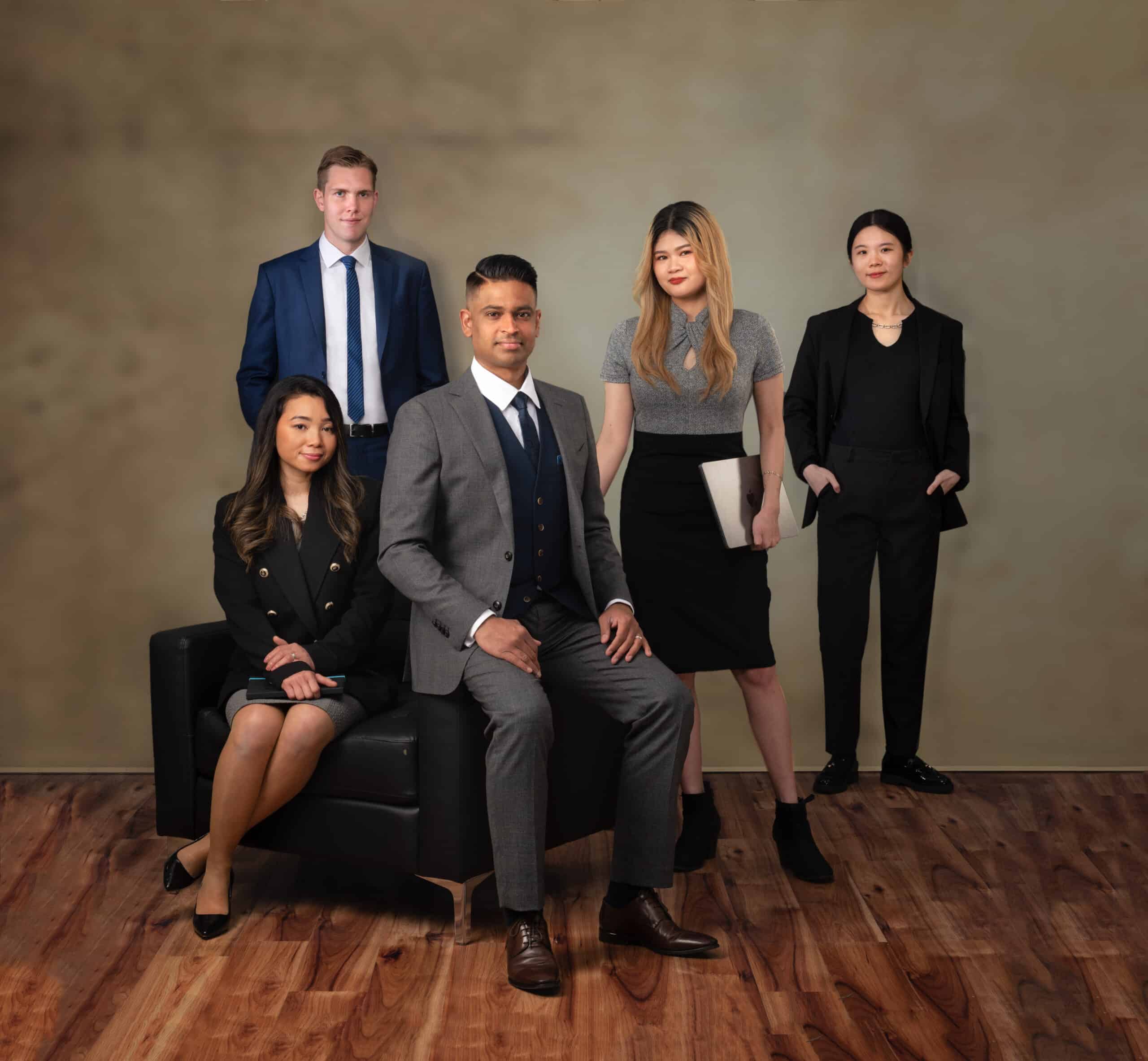
Augustine & Co. Immigration Lawyers has personally overseen hundreds of successful partner visa grants, including complex cases involving Schedule 3 waivers, Medical Officer of the Commonwealth (MOC) health appeals, and post-refusal Administrative Review Tribunal (ART) hearings. We advise on the case as a whole — relationship evidence, sponsor eligibility, and visa status — not just the paperwork.
285+ 5★ Google Reviews
Fixed-Fee Representation
Federal Court Experience
Melbourne CBD Based, Australia-Wide
What Is the Subclass 820/801 Partner Visa?
The Subclass 820/801 Partner Visa is a two-stage onshore pathway to permanent residency for de facto partners and spouses of Australian citizens, Australian permanent residents, and eligible New Zealand citizens. A single application is lodged; the Department assesses it in two stages under one visa fee.
Subclass 820 (Temporary Partner Visa)
Granted first. Lets the applicant live and work in Australia while the Department continues assessing the relationship. Current processing times are 18 months for 50% of applications and 32 months for 90%.
Subclass 801 (Permanent Partner Visa)
Granted at least two years after the original lodgement date, provided the relationship continues and ongoing evidentiary requirements are met. Confers Australian permanent residency.
Processing figures: immi.homeaffairs.gov.au global processing times, last updated 4 Aug 2026, checked 26 Aug 2026.
You must be in Australia when the application is lodged. Since November 2023 there is no requirement to be in Australia when the visa is granted — the 820 can be granted whether you are onshore or offshore, provided you are not in immigration clearance at that moment (source: legislation.gov.au, checked 26 Aug 2026). This is a recent enough change that most information available publicly hasn’t caught up with it, so it’s worth stating clearly here. The visa allows the applicant to remain lawfully in Australia on a Bridging Visa A during processing, with full work rights and Medicare access.
820 vs 309?
If a partner is currently outside Australia, the offshore equivalent is Subclass 309 (temporary) leading to Subclass 100 (permanent). Compare all four partner visa subclasses on our pillar page →
Who Qualifies for the Subclass 820/801 Partner Visa?
Eligibility for the 820/801 pathway is assessed across three categories: the applicant’s circumstances, the sponsor’s circumstances, and the nature of the relationship itself. All three must be satisfied for a grant.
- In a genuine and continuing de facto relationship or marriage with the sponsor
- Physically in Australia at the time of lodgement
- Holds a substantive visa at the time of application — or, if not, addresses the Schedule 3 criteria or seeks a waiver of them
- Meets health, character, and identity requirements
- Australian citizen, Australian permanent resident, or eligible New Zealand citizen
- At least 18 years old
- Has not already sponsored two partners in their lifetime, and if they have sponsored one before, at least 5 years have passed since that earlier application was lodged — both limits are waivable by the Minister for compelling circumstances (source: legislation.gov.au, checked 26 Aug 2026)
- Meets character requirements, including police checks
- Has not been convicted of a relevant sponsor-related offence
- De facto: lived together for at least 12 months before lodgement (limited exceptions, including registered relationships in participating states)
- Married: marriage legally recognised in Australia
- Relationship is genuine, continuing, and not one of convenience
- Applicant and sponsor are not related by family
Not sure if you qualify?
Our pillar page has an interactive Partner Visa eligibility quiz that walks through every criterion in under 5 minutes. Take the eligibility quiz →
The Four Pillars of Partner Visa Evidence
The Department of Home Affairs assesses a relationship against the same four evidentiary “pillars” for every 820/801 couple, married or de facto — the regulation setting them out just differs by relationship type: Regulation 1.15A of the Migration Regulations 1994 for spouse (married) relationships, and Regulation 1.09A for de facto relationships (source: legislation.gov.au, checked 26 Aug 2026). Every application needs credible, contemporaneous evidence across all four pillars — a gap in any one is the single most common reason applications are refused.
Pillar 1 — Financial Aspects
Joint bank accounts, shared major purchases, a joint lease or mortgage, jointly-held assets, shared financial responsibility for household expenses, joint insurance policies, and joint tax records where applicable.
Pillar 2 — Nature of the Household
A shared residential address on ID and correspondence, shared responsibility for housework, joint utilities and household bills, cohabitation history, and shared parenting or caring responsibilities.
Pillar 3 — Social Aspects
Joint invitations, wedding certificates, photos across time, a social media presence as a couple, statutory declarations from friends and family confirming the relationship is genuine, and evidence of joint travel and joint social activities.
Pillar 4 — Nature of the Commitment
Statutory declarations from both partners about the history and future of the relationship, evidence of ongoing companionship, a communication history during periods of separation, and future plans documented in writing — wills, superannuation nominations, life insurance beneficiary listings.
It is the balance across all four that matters
Neither Regulation 1.15A (married) nor Regulation 1.09A (de facto) requires evidence in every single sub-category. The Department assesses the balance of evidence across the four pillars as a whole. Our role is to identify which pillar is weakest for a given couple’s circumstances — and to apply the framework under the regulation that actually matches their relationship type — and build targeted evidence to strengthen it before lodgement.
Partner Visa 820/801 Costs (2026)
Partner visa costs fall into two categories: Department of Home Affairs application fees, and legal representation fees.
Department of Home Affairs Application Fees
- Main applicant AUD 11,710
Confirmed (source: immi.homeaffairs.gov.au, checked 26 Aug 2026).
- Additional adult applicant (18+) AUD 5,860
Source: immi.homeaffairs.gov.au fees and charges page, checked 26 Aug 2026.
- Additional dependent child (under 18) AUD 2,935
(source: immi.homeaffairs.gov.au, checked 26 Aug 2026).
A single application fee covers both the 820 and 801 stages. No additional visa fee is payable at the 801 stage. DHA partner visa fees are indexed annually on 1 July.
Augustine & Co. Immigration Lawyers Legal Representation Fees
We offer fixed-fee representation for partner visa matters, quoted at your initial consultation with no hidden costs. Fees vary by complexity:
- Standard 820/801 application (both partners onshore, straightforward evidence): fixed-fee, quoted at consultation
- Complex cases (Schedule 3 waiver, prior refusal, health issue, sponsor character concerns): higher fixed-fee, quoted at consultation
- Post-refusal ART appeals: separate fixed-fee, quoted after we review the refusal decision
Additional Costs to Plan For
- Medical examinations for all applicants (from approximately $400 per adult)
- Police clearances from every country where the applicant has spent 12+ months as an adult (varies by country)
- Certified document translations (if required)
- Statutory declaration witnessing fees (usually free — e.g. a Justice of the Peace)
Partner Visa 820 Processing Times
Partner visa processing time depends on the Department of Home Affairs caseload, current Ministerial Directions, and the complexity of the specific application.
| Stage | 50% Decided Within | 90% Decided Within |
|---|---|---|
| 820 (Temporary Partner Visa) | 18 months | 32 months |
| 801 (Permanent Partner Visa) | 5 months | 12 months |
Figures: Department of Home Affairs global visa processing times, last updated 4 Aug 2026, checked 26 Aug 2026. Home Affairs updates this data monthly, and the family visa queue was reprioritised on 25 July 2026 under Ministerial Direction 117.
Processing time is affected by:
- Whether the evidence is complete at lodgement (incomplete applications are pushed to the back of the queue)
- Whether the Department requests additional information (each request typically adds 4 to 8 weeks)
- Whether medical or police check delays occur
- Current Ministerial Direction 117, effective 25 July 2026, which sets the order family visa applications are processed in — onshore partner and dependent child applications sit in the highest priority tier available outside ministerial intervention cases (source: immi.homeaffairs.gov.au, checked 26 Aug 2026)
While you wait: Bridging Visa A
While an 820 application is being processed, the applicant holds a Bridging Visa A, which allows them to live and work in Australia and, with an approved Bridging Visa B, to travel overseas and return. See the section below for full BVA rights.
Your Rights on Bridging Visa A During 820 Processing
Lodging an 820 application onshore triggers a Bridging Visa A (BVA), which activates when the applicant’s current substantive visa expires. The BVA is what keeps the applicant lawful in Australia while the Department processes the 820.
What the BVA Gives You
- Full work rights in Australia, unless a prior substantive visa carried a work restriction that transfers to the BVA — uncommon, and something we assess at consultation
- Medicare eligibility as a Subclass 820 applicant
- The right to remain in Australia lawfully until the 820 is decided
What the BVA Does Not Give You
- Overseas travel. The BVA is a domestic visa only. Travelling overseas during processing requires a Bridging Visa B (BVB); re-entry is not guaranteed, and we generally recommend deferring non-essential travel until the 820 is granted.
Urgent travel?
For urgent travel needs — family illness, work travel, a wedding — we can assess BVB eligibility as part of a matter. Contact us before booking flights.
Complex Partner Visa 820/801 Cases
Complex partner visa matters are the core of our practice. The situations below are ones we handle regularly, and where the detail of the argument decides the outcome.
What Schedule 3 is, in plain terms. When you lodge an onshore 820, the Migration Regulations expect you to hold a substantive visa at the time you apply. If you don’t — your last visa has expired, you’re on a bridging visa that doesn’t count, or you’re unlawful — the Schedule 3 criteria (3001, 3003 and 3004) are triggered. In practice this means the Department cannot grant your 820 unless you satisfy those criteria, or you persuade the Department there are compelling reasons to waive them.
Why applications quietly fail here. Many couples in this position don’t realise Schedule 3 applies to them until a refusal arrives. They lodge a genuine, well-evidenced relationship application, and it is refused not because the relationship wasn’t real, but because the Schedule 3 argument was never made — or was made without the evidence the Department actually weighs. The relationship was never the problem. The failure to address the bar was.
What “compelling reasons” actually means. This is where judgement replaces box-ticking. The Department is not looking for a hardship essay. It weighs specific factors: Australian-citizen children and the effect of separation on them, the length and genuineness of the relationship, whether the sponsor could reasonably relocate, the applicant’s compliance history, and whether the circumstances that led to the unlawful status were within the applicant’s control. A strong waiver submission ties each factor to evidence and to the case law on what “compelling” has been held to mean — it does not simply assert hardship.
A point that works in your favour. When the Department weighs “compelling reasons,” it must take account of your circumstances up to the time the decision is made — not just the circumstances that existed when you lodged. That principle, established by the Full Federal Court in Waensila, means events that develop while your application is pending (a pregnancy, a health diagnosis, a change in your sponsor’s circumstances) can be brought to bear on the waiver argument. Presenting them properly is part of the work.
How we approach it. We identify Schedule 3 exposure before lodgement, not after a refusal, and we build the waiver argument into the application from the start rather than raising it in response to a Departmental concern. Where a matter has already been refused on Schedule 3 grounds, the argument moves to the Administrative Review Tribunal, and the framing changes. See our Schedule 3 waiver guide → and our ART & Federal Court Appeals page →.
Where an 820 or 801 has been refused, there are generally 21 days to lodge a review application at the Administrative Review Tribunal. Augustine & Co. Immigration Lawyers represents partner visa clients at the ART. See our ART & Federal Court Appeals page →.
Where this comes up. If the relationship ends before the permanent 801 is decided, the instinctive assumption is that the visa is lost. That is not always so. Permanent residence may still be available where there has been family violence in the relationship, where the relationship produced a child, or where the sponsoring partner has died.
Why each pathway is exacting. Each of these has its own strict evidentiary requirements and, in the family violence pathway, a specific statutory framework for how the violence is established — whether through judicially determined evidence or the non-judicial route. The evidence that satisfies one pathway does not carry over to another, and the time pressure is real.
How we approach it. These are matters to raise with us urgently rather than to sit on. We assess which pathway is available on the specific facts and prepare the submission the relevant provision actually requires. See our dedicated Relationship Breakdown page →.
A sponsor can sponsor a maximum of two partners in their lifetime, with at least 5 years between sponsorships — the 5 years runs from when the earlier application was lodged, not from when it was decided or the relationship ended. A sponsorship that was refused generally doesn’t count toward the two-sponsorship limit. Both the lifetime cap and the 5-year gap can be waived by the Minister for compelling circumstances (source: legislation.gov.au, checked 26 Aug 2026). Where a sponsor also has a criminal history or other character concerns, targeted submissions can still succeed. We assess sponsor risk — including the sponsorship history calculation — before lodgement to avoid preventable refusals.
Where this comes up. Partner visas require the applicant to meet the health requirement, assessed against Public Interest Criterion 4007. If an applicant has a health condition the Medical Officer of the Commonwealth (MOC) assesses as likely to result in significant health-care or community-service costs, or to prejudice the access of Australians to services in short supply, the application can be refused on health grounds — even where the relationship is beyond question.
The part most people miss. PIC 4007 is waivable. Unlike the equivalent criterion in many other visa classes, a partner visa applicant who fails the health requirement can ask the Department to waive it. Whether the waiver is granted turns on weighing the costs the MOC has identified — measured against a significant-cost threshold, currently $86,000 over the relevant period — against the compassionate and compelling circumstances of the case: the strength of the relationship, Australian ties, the applicant’s ability to mitigate costs, and the consequences of refusal for the family.
Why the MOC assessment itself can be challenged. The cost estimate the MOC produces is not beyond question. It rests on assumptions about likely treatment, duration and cost, and those assumptions can be contested with specialist medical evidence, treatment plans and cost analyses that present a more accurate picture. A significant part of the work is engaging with the MOC’s reasoning before the waiver stage is even reached.
How we approach it. We flag health exposure at the outset, obtain specialist evidence early, and prepare both the response to the MOC assessment and, where needed, the waiver submission — so the health argument and the relationship argument are built in parallel rather than one being an afterthought.
Relationships that commenced before Australian marriage equality often lack conventional documentary evidence for their early years. We know how to reconstruct evidence for pre-2017 relationships to satisfy the Four Pillars framework.
The fear applicants arrive with. Someone who has had a visa refused or cancelled while onshore often believes they are barred from lodging anything further while in Australia — the “section 48 bar.” For many visa types, that is correct.
Why it doesn’t stop a partner visa. Subclass 820 is one of a small number of visa classes prescribed under the Regulations as exempt from the section 48 bar. An applicant who has had a previous onshore refusal or cancellation can still, in most cases, lodge a valid onshore partner application. The bar that blocks other pathways does not block this one.
The limit that matters. There is one important exception to the exception. If the visa that was previously refused or cancelled was itself a partner visa, the onshore pathway is generally closed, and the options are different — usually involving an offshore application or a review of the earlier decision. This is exactly the distinction that decides whether someone can stay in Australia to apply, so it is worth confirming against your specific history before you lodge rather than assuming the door is open.
Why we set it out plainly. For a client who has walked in convinced their options are closed, being told — correctly — that the partner pathway may remain open to them is often the single most valuable thing they hear. Equally, for someone whose partner visa was already refused, knowing the limit upfront prevents a lodgement that would simply be found invalid. Getting this right at the outset is the whole point.
How We Handle Your Partner Visa 820/801 Application
Our partner visa process is built to eliminate the most common causes of refusal before an application is ever lodged.
Step 1: Strategic consultation (60 minutes)
We review the relationship history, immigration history, and current visa status, and identify eligibility issues — Schedule 3, prior refusals, sponsor concerns, health flags — upfront. Clients leave the consult knowing their pathway, timeline, and fixed-fee cost, or a clear reason we've advised against proceeding.
Step 2: Evidence audit and gap analysis
Using our Four Pillars framework, we audit the evidence a couple already has and identify what's missing. Clients get a specific document checklist tailored to their case, not a generic template.
Step 3: Sponsor application and character checks
We prepare the sponsor application in parallel, run the required police checks, and manage the sponsor's obligations from the start. Many of the refusals we see involve sponsor issues that could have been resolved before lodgement.
Step 4: Application preparation and lodgement
We draft statutory declarations, curate evidence submissions, prepare the migration submissions — the legal argument accompanying the evidence — and lodge the application through our secure ImmiAccount access. Clients review and sign before we lodge.
Step 5: Post-lodgement management (through to 801 grant)
We monitor the application, respond to any Departmental requests within their deadlines, coordinate additional evidence if needed, and advise on the 801 stage submissions when the time comes. Two years of ongoing relationship documentation is our responsibility to manage, not the client's.
Situations We See
The scenarios below are illustrative composites, not accounts of individual client matters. They are drawn from the issues these applications turn on in practice, and they show how we approach them.
The situation. A couple in a four-year de facto relationship, both working, sharing a rented apartment. The applicant holds a student visa with eight months left. On paper this is an uncomplicated onshore 820.
What makes it harder than it looks. The lease is in one partner’s name only. Bills are split by transfer rather than held jointly. There is no joint account, because both partners kept the accounts they had before they met. The relationship is entirely genuine — but the evidence they have clusters in one pillar rather than sitting across all four, and it is the balance across the four that the Department assesses.
How we approach it. The work happens before lodgement, not after. We audit what exists against the four pillars, identify which are weak, and build targeted evidence — adding the applicant to the lease and to utility accounts, opening a joint account with real transactional history, obtaining statutory declarations that speak to the specific period the documentary record is thinnest. Lodging six weeks later with a complete evidentiary picture is almost always better than lodging now and answering a request for further information a year in.
Where it lands. A well-evidenced 820 of this kind proceeds without a request for further information, which is the single biggest variable in how long a partner application takes.
The situation. An applicant whose visitor visa expired eleven months ago and who has been unlawful since. He is in a genuine relationship with an Australian citizen, and they have a young child together. He has been told by friends that he simply cannot apply.
What makes it complex. Because he holds no substantive visa, Schedule 3 is triggered. The application cannot succeed on relationship evidence alone, however strong. It needs a compelling-reasons argument — and most applications in this position fail not because the relationship is doubted, but because the Schedule 3 argument was never properly made.
How we approach it. We identify the Schedule 3 exposure at the first consultation and build the waiver argument into the application from the outset. That means addressing the specific factors the Department weighs: the Australian-citizen child and the effect of separation, the genuineness and duration of the relationship, whether the sponsor could reasonably relocate, and how the unlawful status came about. Each factor is tied to evidence and to the authorities on what “compelling” has been held to mean. Because the Department must consider circumstances up to the time of decision, developments while the application is pending can be brought to bear as they arise.
Where it lands. Schedule 3 cases are decided on the quality of the submission. They are winnable — but only where the argument is made properly and supported, rather than asserted.
The situation. A couple lodged their own 820 application. Eighteen months later it was refused: the delegate was not satisfied the relationship was genuine and continuing. The refusal letter gives them a short, non-extendable window to seek review.
What makes it complex. The relationship is real. The problem is that the original application was evidentially thin in the areas the delegate probed, and the couple answered a request for further information without understanding what was actually being tested. On review the Tribunal takes a fresh look — which is an opportunity, but only if the case is rebuilt rather than resubmitted.
How we approach it. The first step is the decision record, read against the deadline on the day it arrives. We identify precisely what the delegate was not satisfied about, then build the evidence that answers it — including material that post-dates the original lodgement, since the Tribunal considers the relationship as it stands at review. We prepare both partners for hearing, because in partner matters the oral evidence often carries as much weight as the documents.
Where it lands. A refusal on relationship grounds is not the end of the matter. But the review window is strict and cannot be extended, so the work starts immediately.
The situation. An applicant is diagnosed with a chronic condition during processing. The Medical Officer of the Commonwealth assesses the likely cost of care over the relevant period as exceeding the significant-cost threshold. The relationship has never been in question — but the application is now at risk on health grounds.
What most people don’t know. For partner visas the health criterion is waivable. Unlike many other visa classes, an applicant who fails it can ask the Department to waive the requirement, weighing the identified costs against the compassionate and compelling circumstances of the case.
How we approach it. Two arguments run in parallel. The first engages with the MOC assessment itself — the cost estimate rests on assumptions about likely treatment, duration and cost, and those assumptions can be contested with specialist evidence, treatment plans and cost analysis that present a more accurate picture. The second prepares the waiver submission: the strength and duration of the relationship, Australian ties, capacity to mitigate costs, and the consequences of refusal for the family. Doing both at once matters, because by the time a waiver is refused the opportunity to challenge the underlying assessment has usually passed.
Where it lands. Health-based refusals are among the most distressing outcomes in partner work, and among the most avoidable where the exposure is identified early and specialist evidence is obtained before the assessment is finalised.
Meet Your Partner Visa Lawyer

Calvin J. Augustine, Principal Lawyer & Founder
Calvin Augustine is the founding solicitor of Augustine & Co. Immigration Lawyers. He has personally overseen hundreds of successful Partner Visa applications across Subclasses 820, 801, 309, and 100, including complex ART appeals, Schedule 3 waivers, and Federal Court judicial review.
He holds an LL.B (Hons) from the University of London, completed his Australian law bridging units at Deakin University, and is admitted to practice in the Supreme Court of South Australia — appearing in all Victorian Courts and Tribunals at trial and appellate level — the High Court of Australia, and the High Court of Malaya.
- LL.B (Hons), University of London
- Australian Law (bridging units), Deakin University
- Admitted: Supreme Court of South Australia, appears in all Victorian Courts and Tribunals
- Admitted: High Court of Australia
- Admitted: High Court of Malaya (Malaysia)
- Legal Practitioner No.: 5512183
- Member: Law Institute of Victoria (LIV)
- Member: Migration Institute of Australia (MIA)
Partner Visa 820/801, Frequently Asked Questions
Current processing times are 18 months for 50% of applications and 32 months for 90% (source: immi.homeaffairs.gov.au global processing times, last updated 4 Aug 2026, checked 26 Aug 2026). Timelines depend on evidence completeness at lodgement and any subsequent Departmental requests.
DHA application fees are AUD 11,710 for the main applicant (as of 2026), plus additional fees for included family members. Legal representation is quoted as a fixed fee at the initial consultation. Medical exams, police checks, and translations add further cost. A full breakdown is provided at consultation.
Yes. Once the 820 application is lodged onshore and the applicant’s current substantive visa expires, they are granted a Bridging Visa A, which includes full work rights — unless the previous visa had work restrictions that transfer to the BVA, which we assess at consultation.
The applicant may still qualify for permanent residency under family violence provisions, if the relationship produced children, or if the Australian partner has died. Each pathway carries strict evidentiary requirements and time limits — contact us urgently. See our Relationship Breakdown page for details.
Not on a Bridging Visa A alone. A Bridging Visa B (BVB) must be applied for before travelling, and re-entry is not guaranteed. We generally recommend deferring non-essential travel until the 820 is granted. For urgent travel needs, contact us before booking flights.
No. The 820 and 801 are lodged as a single application. Around two years after the original lodgement date, the Department asks you to provide further evidence that the relationship is continuing. That evidence has to be supplied — the 801 is not granted automatically — and we prepare and lodge it as part of the matter.
There are generally 21 days to lodge an application at the Administrative Review Tribunal (ART). Augustine & Co. Immigration Lawyers represents partner visa refusals at the ART. Advice should be sought immediately — the 21-day deadline is strict.
Schedule 3 applies when an onshore 820 is lodged without holding a substantive visa — for example, after a Bridging Visa expired, or on a tourist visa that has since ceased. The applicant must either satisfy specific criteria or demonstrate compelling reasons for a Schedule 3 waiver. See our detailed Schedule 3 waiver guide.
The Department accepts self-lodged applications. Whether a lawyer is needed depends on complexity: with no eligibility flags, a straightforward relationship history, and complete evidence, a DIY application is possible. If any of the complex situations above apply, or a prior refusal is on record, we recommend legal representation given the stakes involved.
Book Your Partner Visa 820/801 Consultation
A 60-minute strategic consultation is the starting point for every 820/801 matter we take on. Clients leave with a clear pathway, an honest timeline, and a fixed-fee cost — or a candid reason we’ve advised against proceeding. Book online, or call our Melbourne office to speak with our intake team.
Visit
Level 11/456 Lonsdale Street, Melbourne VIC 3000
Call
+61 3 7020 6514
Hours
Mon to Fri, 9:00 AM to 5:30 PM (by appointment)
This page provides general information about the Subclass 820/801 visa and does not constitute legal or migration advice. Immigration law, visa criteria, fees and processing times change frequently, and the way the law applies depends entirely on your individual circumstances. Nothing on this page should be relied on as advice for your situation, and reading it does not create a lawyer–client relationship. Before you lodge an application or make a decision that affects your visa status, obtain advice specific to your circumstances from a qualified Australian legal practitioner. Augustine & Co. Immigration Lawyers is an incorporated legal practice; our lawyers are admitted in Australia and entitled to provide immigration legal assistance. Last reviewed: 26 Aug 2026.